Global Warming Explained for Kids
How carbon moves through Earth’s system — and why burning fossil fuels disrupts the balance
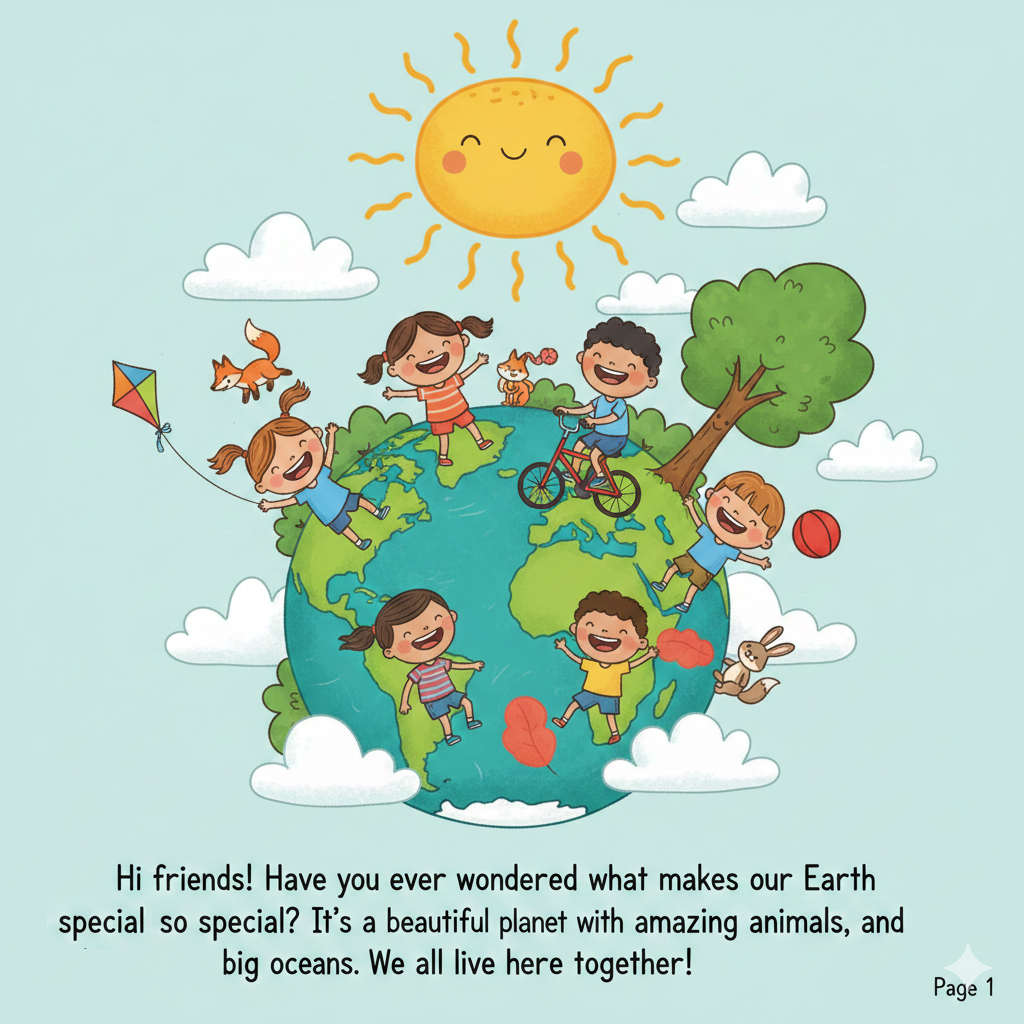
Hi friends! Have you ever wondered what makes our Earth so special? It's a beautiful planet with amazing animals, tall trees, and big oceans. We all live here together!
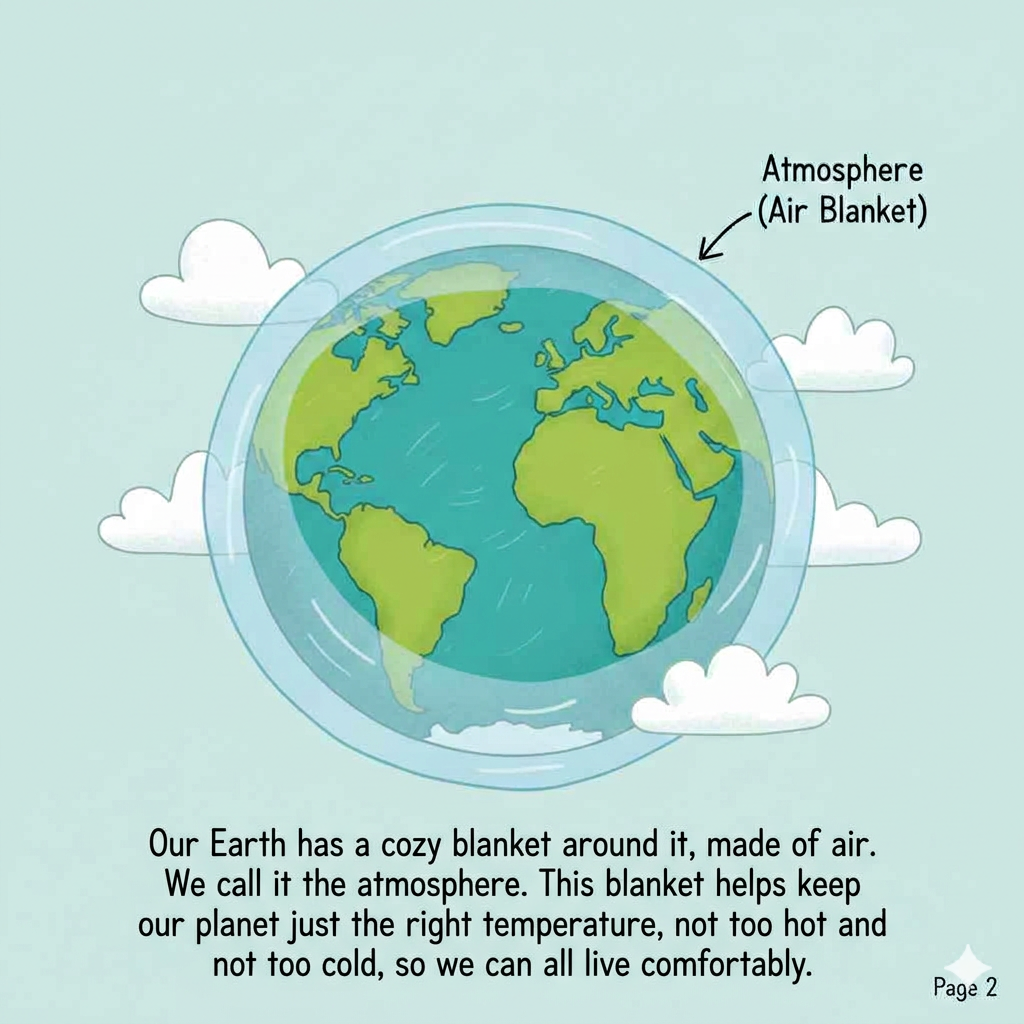
Our Earth has a cozy blanket around it, made of air. We call it the atmosphere. This blanket helps keep our planet just the right temperature, not too hot and not too cold, so we can all live comfortably.
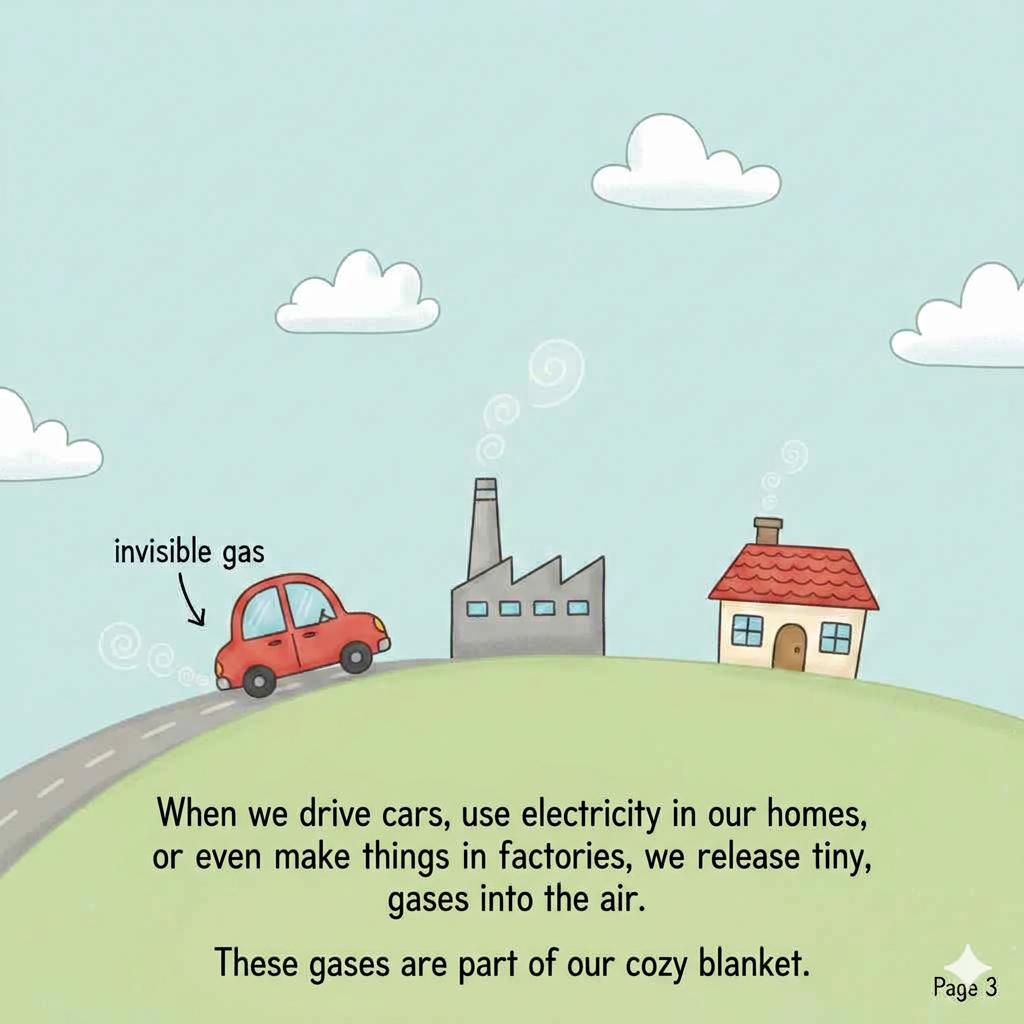
When we drive cars, use electricity in our homes, or even make things in factories, we release tiny, invisible gases into the air. These gases are part of our cozy blanket.
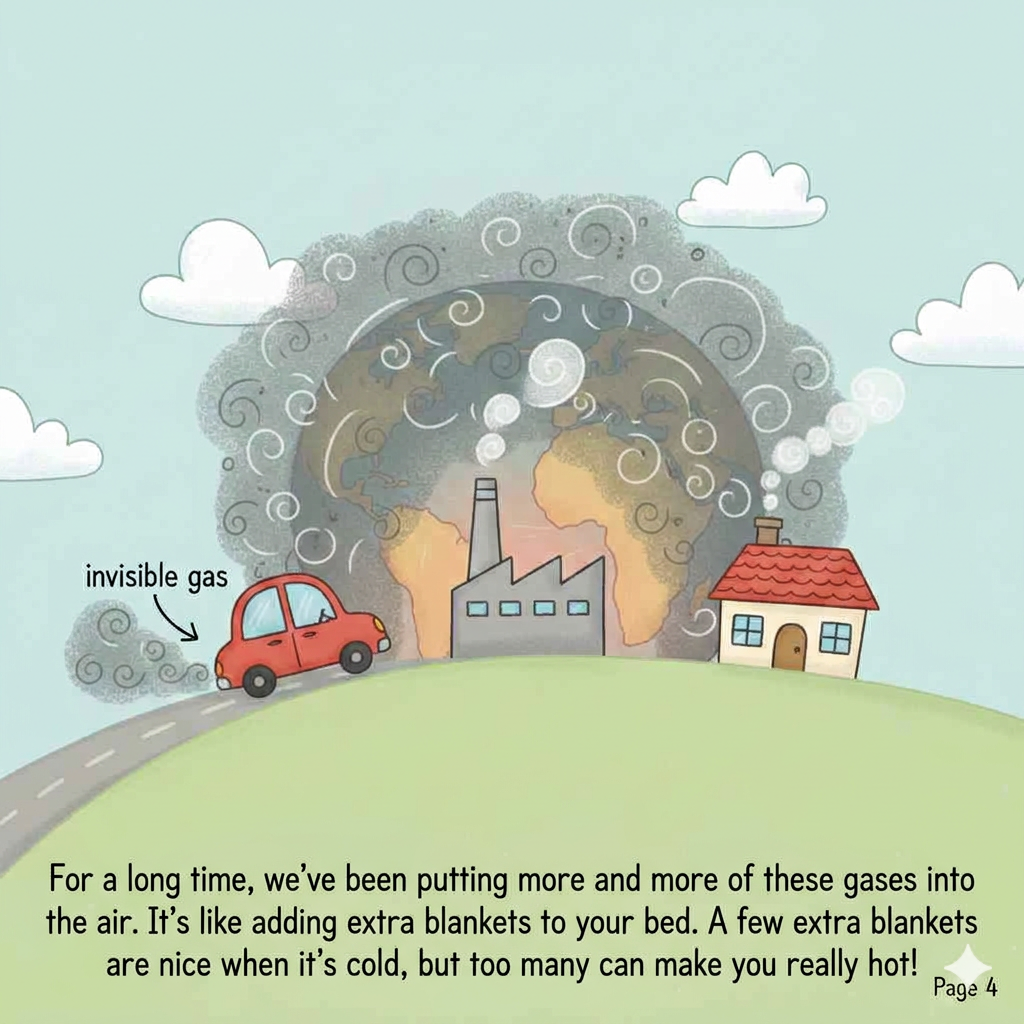
For a long time, we've been putting more and more of these gases into the air. It's like adding extra blankets to your bed. A few extra blankets are nice when it's cold, but too many can make you really hot!
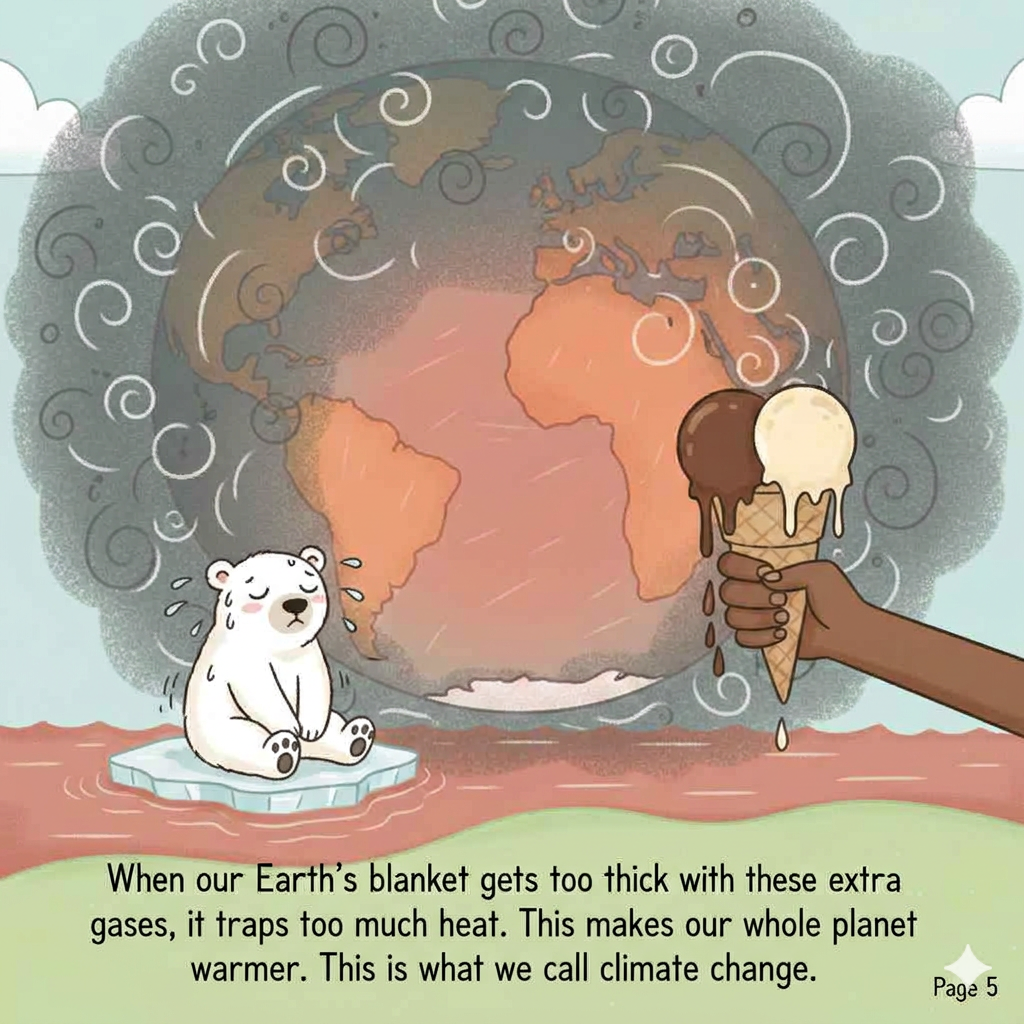
When our Earth's blanket gets too thick with these extra gases, it traps too much heat. This makes our whole planet warmer. This is what we call climate change.
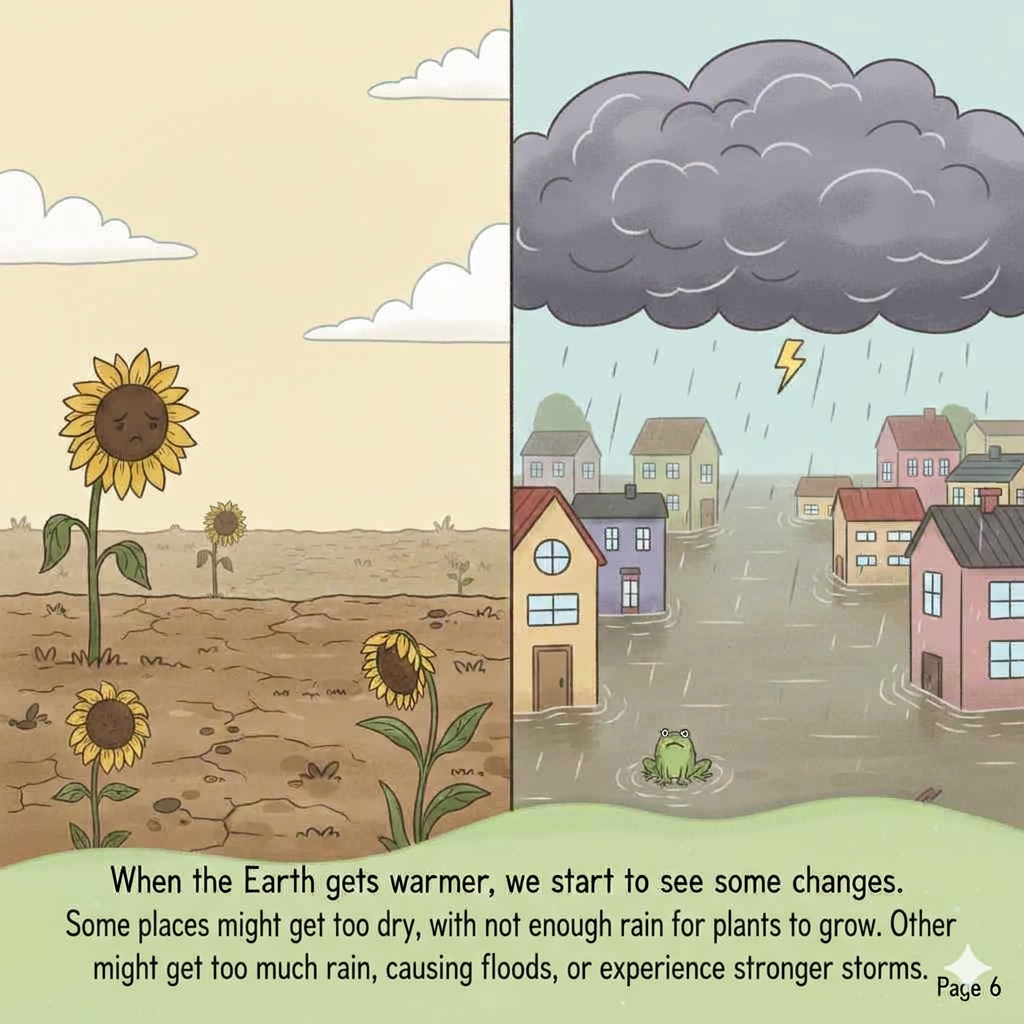
When the Earth gets warmer, we start to see some changes. Some places might get too dry, with not enough rain for plants to grow. Other places might get too much rain, causing floods, or experience stronger storms.
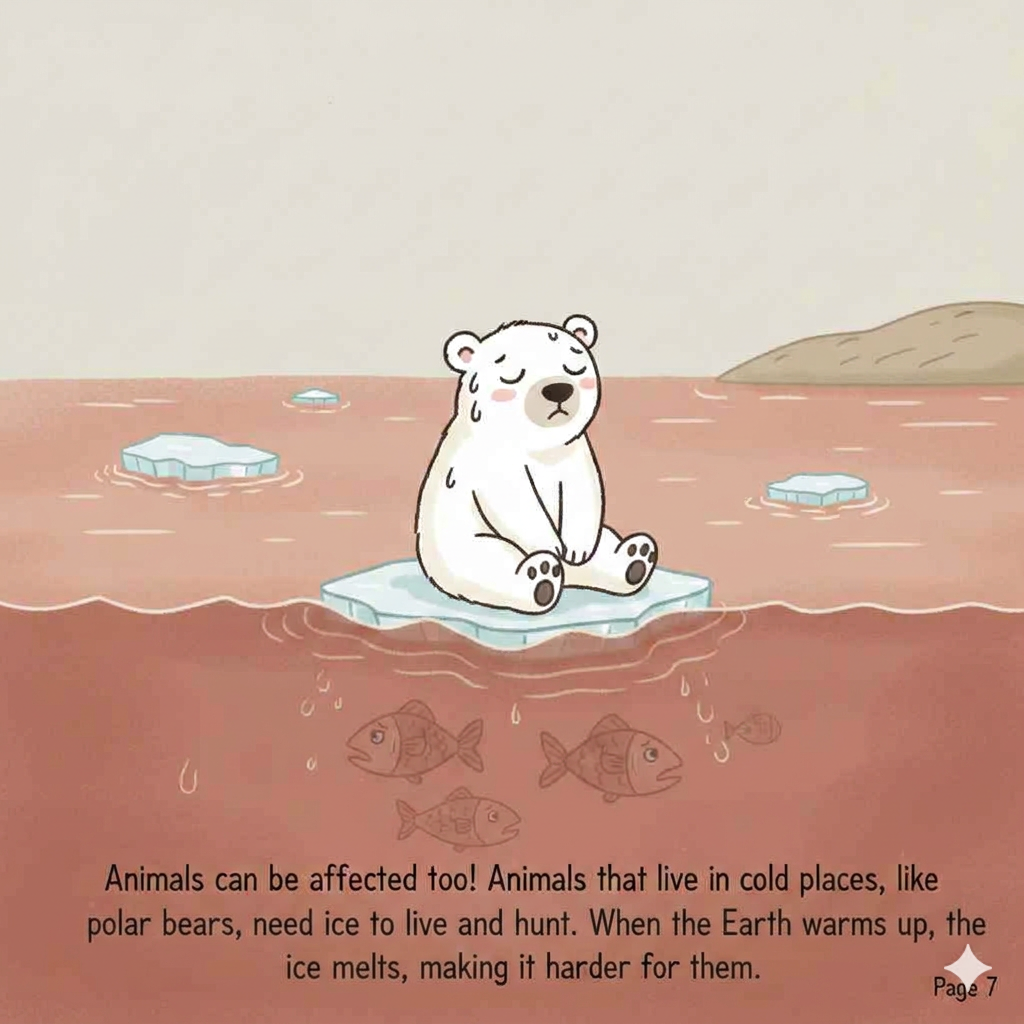
Animals can be affected too! Animals that live in cold places, like polar bears, need ice to live and hunt. When the Earth warms up, the ice melts, making it harder for them.
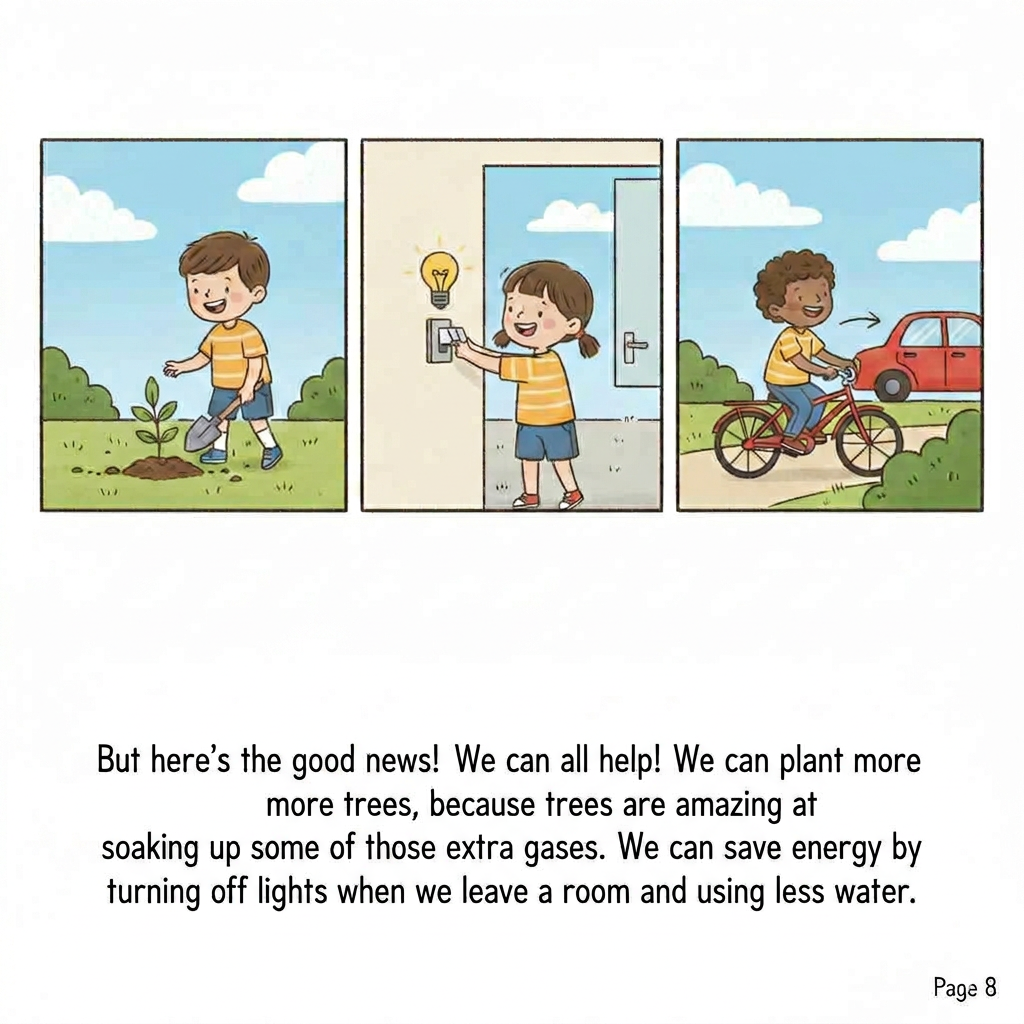
But here's the good news! We can all help! We can plant more trees, because trees are amazing at soaking up some of those extra gases. We can save energy by turning off lights when we leave a room and using less water.
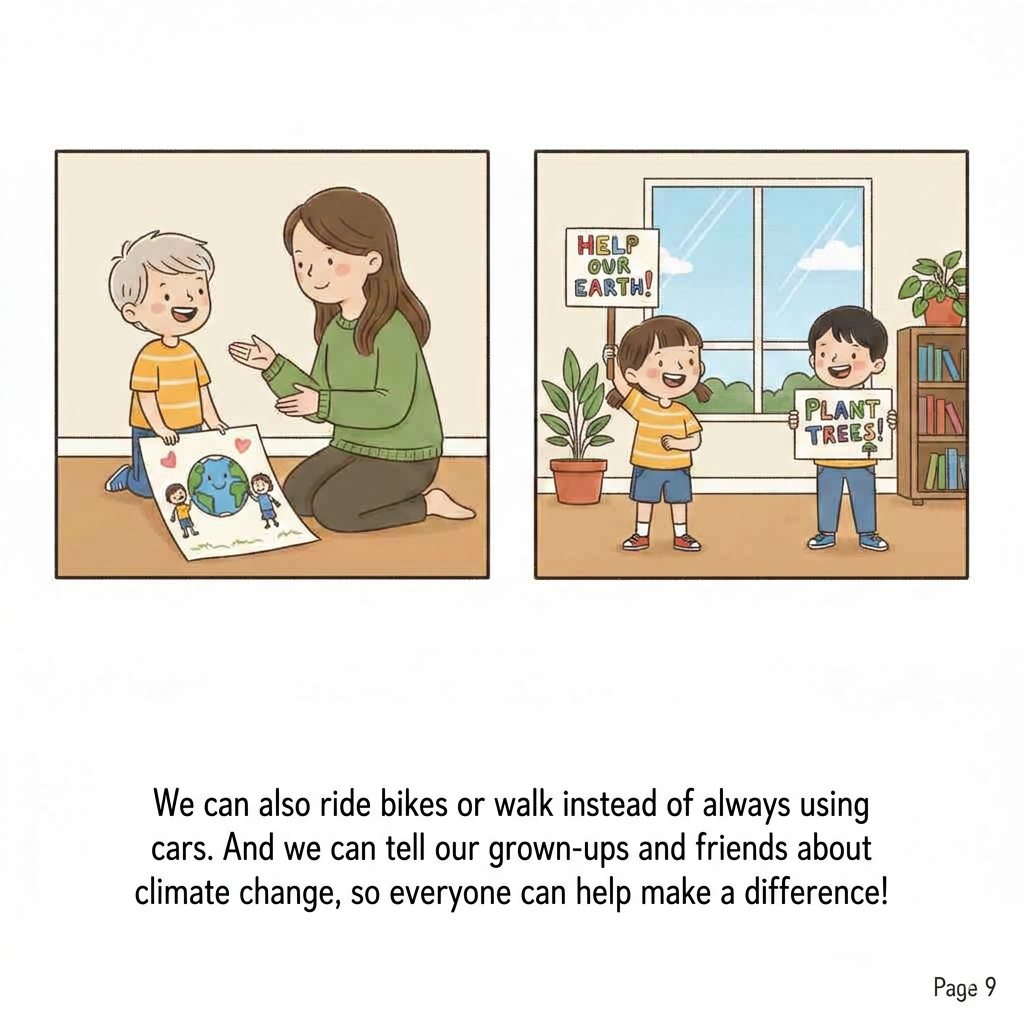
We can also ride bikes or walk instead of always using cars. And we can tell our grown-ups and friends about climate change, so everyone can help make a difference!
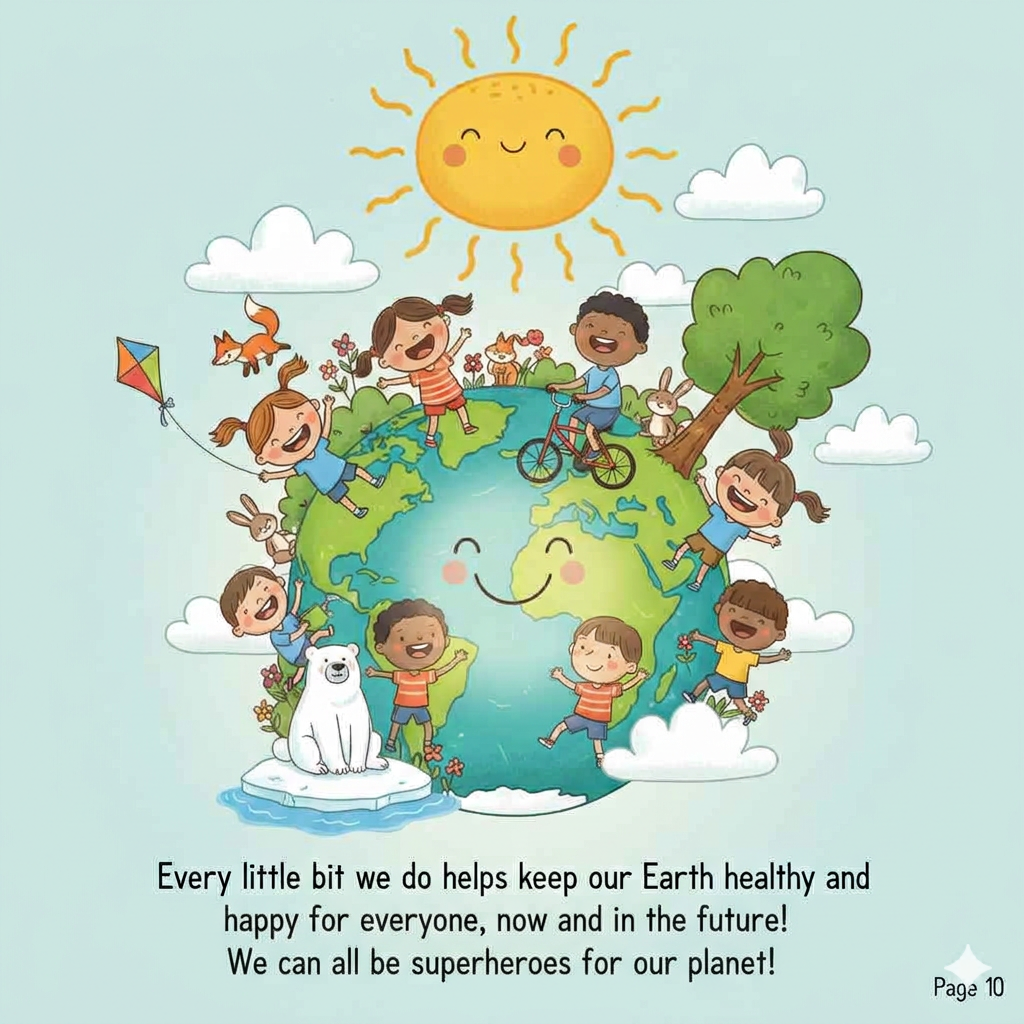
Every little bit we do helps keep our Earth healthy and happy for everyone, now and in the future! We can all be superheroes for our planet!
Tips for Parents & Educators
Talking about climate change for kids can feel like a big task. This picture book is designed as a gentle introduction to global warming science for young learners (ages 5-9).
How to Use This Resource:
-
Read Aloud: Use the illustrations to spark questions. Ask, "What do you see happening to the Earth's blanket?"
-
Hands-on Learning: Pair this story with a simple experiment, like watching an ice cube melt in the sun to talk about Page 7.
-
Empowerment: Focus on Page 8 and 9. Helping kids feel like "superheroes" reduces climate anxiety and encourages positive habits.
Looking for more educational resources or lesson plans? Explore our other guides on Renewable Energy, Protecting Our Oceans, The Travels of Tiny Carbon, The Superpowers of Soil, and Weather vs. Climate.